

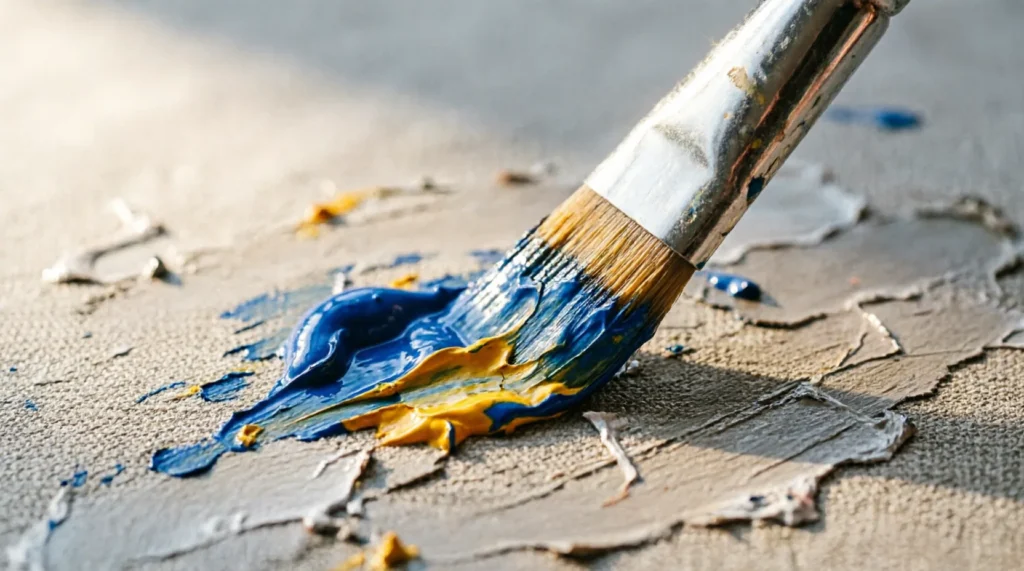
Quick answer: When describing an artistic technique, tap is the correct word choice. You tap a brush to create texture or remove excess paint, whereas crush implies destructive force and is incorrect for standard painting styles.
It is remarkably common to see writers mix up “tap” and “crush” when describing how to apply paint, build texture, or handle art supplies. This confusion often stems from dramatic phrasing, misheard verbal instructions, or garbled voice-to-text transcriptions, leading directly to the awkward and highly specific search query “tap or crush the painting style.” As a veteran copy editor who has corrected this exact mistake in hundreds of real manuscripts, I see this error constantly in art instruction books, DIY blog posts, and artist cover letters. The mix-up fundamentally changes the meaning of the sentence, turning a delicate artistic instruction into a description of property damage. Let us clear up exactly which word belongs in your creative vocabulary, why the confusion happens, and how you can permanently eliminate this error from your writing.
| Term | Meaning / When to use | Example sentence |
|---|---|---|
| Tap | To strike lightly and quickly; used for gentle brushwork, stippling, or removing excess paint. | “Gently tap the brush against the canvas to create a soft, stippled effect.” |
| Crush | To press or squeeze with force, causing deformation; incorrect for standard brush techniques. | “Do not crush the bristles, or you will ruin the brush and create muddy textures.” |
When to use “tap”
Use “tap” when describing a light, controlled, and intentional contact with the canvas, palette, or brush. This word conveys the precision, rhythm, and finesse required for legitimate artistic methods. Tapping is a foundational motor skill in painting, whether you are stippling, dry brushing, or simply managing the paint load on your bristles. I see this error constantly in manuscripts, so here is how to fix it in real-world professional contexts:
- Email to an art student:
Error: “Crush the brush on the towel to remove water before you start.”
Fix: “Tap the brush lightly on the paper towel to remove excess water before applying the wash.”
Why it matters: Telling a student to “crush” implies they should mash the bristles, which teaches bad habits and ruins expensive tools. - Resume line for an art instructor or studio manager:
Error: “Crushed paint with palette knives to create texture for gallery displays.”
Fix: “Tapped paint with palette knives to create controlled impasto textures in community workshops.”
Why it matters: A resume must project competence and care. “Crushed” sounds destructive and amateurish, while “tapped” demonstrates technical mastery and intentional technique. - Text message to a fellow artist:
Error: “I’m going to crush the canvas with some new colors tonight, wish me luck.”
Fix: “I’m going to tap in some new stippling techniques on the canvas tonight, wish me luck.”
Why it matters: Even in casual communication, using the correct terminology reinforces your identity as a serious practitioner who respects the craft.
When to use “crush”
Use “crush” only when describing the accidental or intentional destruction of materials, never as a legitimate painting style or brush technique. As noted in the standard definition of Crush, the word means to deform, pulverize, or force inwards by compressing forcefully. In an artistic context, this is a severe warning about damaging your tools, wasting materials, or ruining a substrate, not a recommended creative method.
- Email to an art supplier regarding a damaged order:
Error: “The paint tubes were tapped during shipping, so they are leaking.”
Fix: “The paint tubes were crushed during shipping, causing the aluminum bodies to burst and leak.”
Why it matters: “Tapped” minimizes the issue and sounds like a minor bump. “Crushed” accurately conveys the severity of the damage to support your refund claim. - Resume line for a studio manager or prep tech:
Error: “Tapped the old dried paint blocks for recycling into new mediums.”
Fix: “Crushed and recycled dried acrylic paint blocks to create custom texture mediums for student use.”
Why it matters: In this specific, rare context, “crushed” is the correct verb because the physical action involves pulverizing a solid, dried material, not manipulating a wet brush. - Text message about a studio accident:
Error: “I tapped my favorite sable brush against the easel and now it’s ruined.”
Fix: “I accidentally crushed my favorite sable brush against the easel, and the bristles are permanently splayed.”
Why it matters: Accuracy in describing the accident helps your fellow artist understand exactly what went wrong and validates the loss of the tool.
How to remember the difference
Here is a simple, editor-level memory trick that I teach to my junior proofreaders: Think of the letter P in “tap” as standing for Precision, Palette, and Painting. According to historical and technical overviews of Painting, the practice involves applying pigment to a surface, which inherently requires control, finesse, and deliberate technique rather than brute force. Painting is an additive, careful process.
Conversely, look at the word “crush.” It contains the word “rush,” and rushing your brushwork is the absolute fastest way to ruin a piece of art. When you rush, you apply too much pressure, you ignore the grain of the canvas, and you destroy your tools. If you are rushing, you might crush; if you are precise, you tap. Another helpful trick is to physically mimic the action while you write. If you can perform the action with your eyes closed without damaging your desk, it is a tap. If it requires significant downward force and a grimace, it is a crush.
Common mistakes and exceptions
- The “Color Crush” metaphorical exception: You may occasionally see the word “crush” used in marketing, branding, or informal social media contexts, such as “I have a total color crush on ultramarine blue this season.” This is a metaphorical use indicating a strong fondness or infatuation, not a physical painting technique. It is acceptable in casual blog posts but should be avoided in formal instructional writing.
- Palette knife mixing and mulling: Some artists might loosely say they “crush the paint” when mixing thick impasto or mulling dry pigment with oil on a glass slab. Even then, “mash,” “blend,” “mull,” or “mix” is the far more accurate and professional term to use in instructional writing. “Crush” implies you are breaking the chemical integrity of the pigment binder.
- US vs. UK English differences: There is absolutely no regional spelling difference between “tap” and “crush.” The error is purely a matter of semantic meaning, contextual appropriateness, and vocabulary selection, not geography. A British artist and an American artist will both agree that crushing a sable brush is a tragedy.
- Confusion with “crush” in other industries: In medical contexts, “crush” refers to specific stenting techniques, and in culinary arts, it means to pulverize food. Do not let these unrelated industry usages bleed into your art writing.
Editor’s Checklist for Art Writers
Before you publish your next art tutorial, gallery description, or instructional email, run your draft through this quick editorial checklist to ensure your word choice is flawless:
- Scan for force verbs: Use your word processor’s “Find” function to search for “crush,” “smash,” “mash,” and “tap.” Evaluate each instance. If the action is meant to be delicate, “tap” is your only correct choice.
- Verify the object of the verb: What is being acted upon? If the object is a delicate tool (a sable brush, a linen canvas, a watercolor paper), the verb must reflect care. You tap a brush; you do not crush it.
- Check for metaphorical drift: If you are using “crush” to describe an emotional connection to a color or style, ensure the surrounding context makes it unmistakably clear that this is a figure of speech, not a physical instruction.
- Read the sentence aloud: If the sentence sounds violent or destructive when spoken, you have likely used the wrong verb. Art instruction should sound encouraging and precise, not like a demolition manual.
- Confirm the technical accuracy: If you are describing the preparation of raw materials, “crush” may be technically accurate, but “break down” or “pulverize” might still be more professional alternatives.
Frequently Asked Questions
Is “crush” ever a valid painting technique? No, “crush” is not a recognized painting technique. While you might crush a raw material to prepare it (like crushing dry charcoal into powder or mulling pigment), you do not crush the brush, the canvas, or the wet paint during the actual painting process.
Why do people search for “tap or crush the painting style”? This specific, unusual phrase frequently appears as a cryptic crossword clue or a garbled voice-to-text transcription of verbal art instructions, leading to understandable confusion about which verb is appropriate for describing brushwork.
Can you tap a canvas too hard? Yes, tapping too forcefully with a stiff hog-hair brush can still damage the canvas weave, stretch the fabric unevenly, or push the primer through to the raw threads, so a gentle, controlled touch is always best.
What is the best way to remove excess paint from a brush? The correct, professional method is to gently tap the brush against the inside rim of the paint jar or a clean, folded paper towel, allowing gravity and light vibration to do the work without bending the bristles.

Margaret Walker is an accomplished linguist with over two decades of experience specializing in historical linguistics and word comparisons. With a Ph.D. in Linguistic Anthropology from Harvard University, her career has been marked by her comprehensive studies in language variation and change, particularly in English dialects and regional word patterns. Margaret’s interest in the evolution of language and its social implications drew her to focus on comparing words and phrases that exhibit regional differences and their origins. Her articles are known for their depth in exploring how historical events and cultural shifts influence language changes. At CompareMyWords, Margaret examines and writes on comparative semantics, dialectal diversity, and previously undocumented lexical items, bringing a historical perspective to contemporary issues in language.